XenonStack

A Stack Innovator

Post Top Ad

Showing posts with label AI. Show all posts

Thursday, 26 December 2019

12/26/2019 05:29:00 pm

Solutions for Building IoT based Smart Meters


Introduction to Smart Meters

In the Energy Upgrade solution, IoT is playing a significant role. The use of smart meters is increasing, which enables the intelligent and efficient use of energy at homes and businesses. Many grid power supply companies, small and large industries, private residential sector are also implementing the smart solution for energy efficiency and sustainability.

Business Challenge for Building the Analytics Platform

We need to build a complete analytical solution that can be used for the energy-saving recommendation based on the usages for the large buildings and industries. Also, the challenges were to filter the results found on floors, buildings, heat, water, electric. Along with the dashboard, alerting for usage also should be used based on usage.

Solution Approach for Building IoT based Smart Meters

Complete Smart meter based analytical dashboards which include -
  • Recommendation for energy saving
  • Predictive results for Energy Bills
  • Real-time alerting on some defined alerting rules
  • Analytical results on the base of historical data

Tuesday, 24 December 2019

12/24/2019 04:55:00 pm

Cloud Data Migration from On-Premises to Cloud 


Best Practices of Hadoop Infrastructure Migration

Migration involves the movement of data, business applications from an organizational infrastructure to Cloud for -
  • Recovery
  • Create Backups
  • Store chunks of data
  • High security
  • Reliability
  • Fault Tolerance

Challenge of Building On-Premises Hadoop Infrastructure

  • Limitation of tools
  • Latency issue
  • Architecture Modifications before migration
  • Lack of Skilled Professional
  • Integration
  • Cost
  • Loss of transparency

Service Offerings for Building Data Pipeline and Migration Platform

Understand requirements involving data sources, data pipelines, etc. for the migration of the Platform from On-Premises to Google Cloud Platform.
  • Data Collection Services on Google Compute Engines. Migrate all Data Collection Services and REST API and other background services to Google Compute Engine (VM’s).
  • Update the Data Collection Jobs to write data on Google Buckets. Develop Data Collections Jobs in Node.js and write data to Ceph Object Storage. Use Ceph as Data Lake. Update existing code to write the data to Google Buckets hence use Google Buckets as Data Lake.
  • Use Apache Airflow to build Data Pipelines and Building Data Warehouse using Hive and Spark. Develop a set of Spark Jobs which runs every 3 hours and checks for new files in Data Lake ( Google Buckets ) and then run the transformations and store the data into Hive Data Warehouse.
  • Migrate Airflow Data Pipelines to Google Compute Engines and Hive on HDFS using Cloud DataProc Cluster for Spark and Hadoop. Migrate REST API to Google Compute Instances.
  • The REST API served as Prediction results to Dashboards and acts as Data Access Layer for Data Scientists migrated to Google Compute Instances (VM’s ).

Technology Stack -

  • Node Js based Data Collection Services (on Google Compute Engines)
  • Google Cloud Storage found Data Lake (storing raw data coming from Data Collection Service)
  • Apache Airflow (Configuration & Scheduling of Data Pipeline which runs Spark Transformation Jobs)
  • Apache Spark on Cloud DataProc (Transforming Raw Data to Structured Data)
  • Hive Data Warehouse on Cloud DataProc
  • Play Framework in Scala Language (REST API)
  • Python-based SDKs

Monday, 23 December 2019

12/23/2019 05:41:00 pm

AI-powered Customer Experience Services and Solutions


Role of AI in Customer Experience

With the increase in computation power and decreasing prices of storage devices leads to a digital transformation to apply AI in solving business problems. Some specialists are calling it the fourth industrial revolution. AI is all about making computers think like humans with customer interaction solutions. Using domain expertise of humans, we are feeding the features to the system to create AI to solve problems of domains like healthcare, stocks, Computer Vision (CV), Natural Language Processing (NLP), Retail, Entertainment, etc. Due to these applications, have better solutions for problems like cancer prediction which is a way better than trained medical experts, stock market prediction by analyzing the various traits such as sentiments of people, detecting unusual activities in video, etc. The entire credit goes to the active community of researchers that made solving such problems with greater accuracy.
AI can also be used for customer interaction, like humans are interactive and intuitive researchers are making systems that are as interactive and intelligent as humans but are resistant to tiring and boredom. The driving force behind it is electricity and a network connection. According to Gartner by 2020, 85% of customer interaction will be managed without a human.

Causes of the popularity of AI in customer experience and interaction

  • No human intervention in services
  • Time-efficient
  • Cost-efficient
  • Better data crunching
  • Hungry for data
  • Improves routing of tickets
No human intervention in services — A piece of software deals with the customer for handling its queries. Whatever you ask it can give you better answers or suggestions without saying pardon
Time-efficient — Can handle queries in no time. Without the need to think like a human before answering.
Cost-efficient — A single AI bot can handle communications of many channels at once. Hence, it leads to saving the cost of hiring.
Better data crunching — When tackling with the wide variety of data collected from different sources such as feedback, surveys, customer requirements, etc. humans might get into a state of confusion which to And what to deal first. Using the fusion of AI and machine learning it quantifies the insights collected from the data and ultimately leads to better strategic decisions.
Hungry for data — Results in better performance when we feed to more (variety) data. Let’s take an example of an AI chatbot deployed at some support site. If we keep on asking the short queries, it gives a good result but not as efficient as per the expectations. Great questions will improve its performance as the bot tries to find the intent from the query.
Improves routing of tickets — For a customer-centric organization, it is necessary to improve the ticket’s path. Consider the example of Uber there can be issues like refund status, driver not arrived, etc. So the system must route the tickets by understanding the intent of the problem to
the respective customer care executive so that customer doesn’t need to wait for more.

Some facts and figures related to Artificial Intelligence

  • Robots and AI will replace 7% of jobs in the US by 2025. But an equivalent of 9% of the posts will be created.
  • According to Forrester, 8.9 million new jobs to be created by 2025 which leads to an increase in demand for robot monitoring professionals, data scientists, automation specialists.
  • By 2020 52% of consumers will expect that the company should provide service via virtual reality.
  • 73% of Companies will shift their AI product to the cloud.
  • 58% of consumers want the product can self-diagnose issues and automatically troubleshoot itself.
  • According to Oracle, nearly 8 out of 10 businesses have adopted AI or are planning to take by 2020.
The secret sauce for a successful business
The organization must focus on customer involvement and engagement. With the introduction of AI in customer interaction, people started enjoying the services, increase in time of engaging, gains user trust and improves the brand value.

Building blocks for AI in Customer Experience and Interaction

  • Data Unification
  • Real-time insights delivery
  • Business Context
Data Unification — In an organization, data comes from many sources i.e. records, real-time data and curated data from the team. The problem is how to merge and match these sets of data to get the best out of it. Companies like General Electric (GE) have spent several years in data unification. The most important and tedious phase for data engineering teams to prepare ready for modeling.
Real-time insights delivery — It’s all about analyzing the interest of the customer. Organizations like Amazon, Flipkart has made their recommendation algorithms that recommend product promptly and moreover can increase the buying capacity of the customer (upsell). According to Harvard Business Review, 60% of business leaders, say customer analytics is critical by 2020, it will be increased by 79%.
Business Context — When applying AI in the organization, we first need to understand the perspective of the business. What is our target customer and how we handle the ambiguity in the conversation between customer and support?
 Continue Reading: XenonStack/Blogs

Saturday, 21 December 2019

12/21/2019 06:03:00 pm

Role and Applications of AI in Telecom


Role of AI in Telecom

The complexions of communications networks appear to extend inexorably with the deployment of the latest services, such as -Software-defined wide-area networking (SDWAN) and new technology paradigms, such as network function virtualization (NFV). This Insight discusses the advantages of enabling AI in Telecom.
To meet ever-rising client expectations, communications service providers (CSPs) got to increase the intelligence of their network operations, planning, and improvement.
To move to period time closed-loop automation, CSPs would like systems that square measure capable of learning autonomously. That is solely doable with AI/ML.
Researchers in communication networks square measure are trapping into AI/ML techniques -

Best trends in Communication Networks and Services

  • Characterized requirements
  • Multimedia services
  • Precision management
  • Predictable future
  • Intellectualization
  • More attention to security and safety
  • Trends of mobile network
  • Big data for development and ICT monitoring

Potential AI Use Cases in Telecom

Artificial Intelligence for Telecommunications Applications identifies seven critical telecom AI use cases -
  • Network operations monitoring and management
  • Predictive maintenance
  • Fraud mitigation
  • Cybersecurity
  • Customer service and marketing virtual digital assistants
  • Intelligent CRM systems
  • CEM
  • Base station profitability
  • Preventive maintenance
  • Battery Capex optimization
  • Trouble price ticket prioritization

Network Operations Monitoring & Management

Increased quality in networking and networked applications is driving the necessity for redoubled network automation and lightness. Applications of AI/ML include -
  • Anomaly detection for operations, administration, maintenance and provisioning (OAM&P)
  • Performance watching and optimization
  • Alert/alarm suppression
  • Bother price ticket action recommendations
  • Automated resolution of bother tickets (self-healing)
  • Prediction of network faults
  • Network capability designing (congestion prediction)
AI/ML might use clustering to search out correlations between alarms that had antecedently been undiscovered or use classification to coach the system to rank alarms.
The following potential use cases with AI and ML algorithms in a very mobile context -
AI at the RAN -
AI at the core — Autonomous VNF scale in\out, up\down.
  • Provision of elasticity.
  • Intelligent network slicing management
  • Service prioritization and resource sharing.
  • Intelligent fault localization and prediction.
AI at the front haul — Traffic pattern estimation and prediction; Versatile, practical split
Different general AI applications (RAN, core or end-to-end network) -
Continue Reading: XenonStack/Insights

Thursday, 19 December 2019

12/19/2019 05:38:00 pm

Chatbot Development and Platform with Machine Learning


Overview of Building ChatBots with Deep Learning

A ChatBot is an implementation of Conversational Interface Intelligently comprising of Machine Learning, Deep Learning as their backbone. ChatBots hold variety including be Textual, Voice and Image-based interactions.
The growth of chatbots has opened up new areas of customer engagement and new methods of fulfilling business in the form of conversational commerce. It is the most useful technology that businesses can rely on, possibly following the old models and producing apps and websites redundant. A chatbot is a computer program that copies human communications in its natural format including text or spoken language using AI procedures such as Natural Language Processing, image, video processing, and audio analysis. The most impressive characteristic of the bots is that they learn from past interactions and become intelligent and more intelligent over time. Chatbots works in two ways- rule-based and smart machine-based. Rule-based chatbots give predefined responses from a database, based on the keywords used for the research. However, smart machine based chatbots receive their capabilities from Artificial Intelligence and Cognitive Computing and adapt their operation based on customer interactions.
The chatbot can be of two types: Goal-oriented (such as Siri, Alexa, Cortana, etc.) and General Conversation (Microsoft Tay bot).
Conversation framework of ChatBot acts in three stages:

Business Challenge for Building Chatbots

  • A fixed set of answers
  • Integration of ChatBot
  • Understanding of Problem
  • Security Issues
  • Lack of Human Behaviour and Intentions
  • Managing a ChatBot
  • NLP limitations

Solution Offered for Implementing ChatBots with Deep Learning

Deep Learning which is galvanized by the functioning of the human brain, has composite engineering and used for the imitation of the data. Neural Network acts as the elementary brick of Deep Learning. A Neural Network is an Artificial Model of the human brain network modeled using hardware and software.

ChatBots Implementation Techniques

  • Streaming of incoming data through the backend
  • Create a model using Natural Language Processing
  • Create a Natural Conversational Flow
  • Add features to automate the process
  • Invite Customers to Join
 

Wednesday, 18 December 2019

12/18/2019 05:35:00 pm

Smart Manufacturing and IoT Solutions

Introduction to Smart Manufacturing

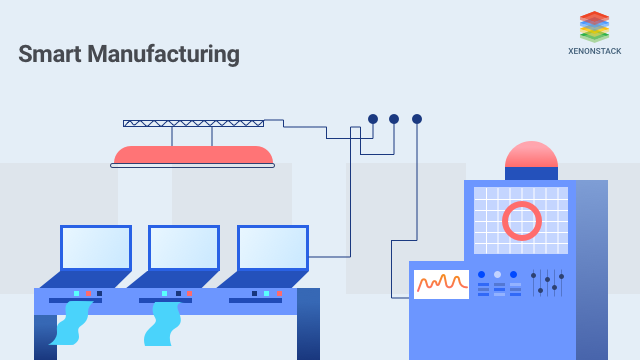
Smart manufacturing is a technology-driven approach that uses Internet-connected machinery to observe the production process. The purpose of SM is to recognize the possibilities for automating processes and use data analytics to enhance manufacturing execution.
  • Machines have threshold values for the different parameters like Temperature, Oil pressure, and Amperage which should not be crossed.
  • Implementation of the Internet of Things (IoT) enables proactive maintenance breaks on the machines to enable manufacturing for smart manufacturing. The collection of data in Real-Time is an excellent solution.
  • Smart Manufacturing industries reduce the risks

Challenge for Building the IoT Platform

Scalable Solution for smart manufacturing to manage all the machines at a single central point and handle sizeable Real-Time streaming data from sensors that can provide the alerts and trigger to turn off the motor in very minimum time.

Solution Offered Real-Time Data and IoT Platform

Installation of the sensor to collect each value (Temperature, Oil pressure, Amperage) in Real-Time using Google Cloud Platform.
Google Cloud IoT Core to ingest data from all sensors attached to different machines. The data collected from the sensors contain the machine identification number to differentiate the received data.
Google Cloud IoT Core sends the collected data to Google Cloud Pub/Sub. This data stream routes at multiple locations. Store the raw data into BigQuery and also to Google Cloud Function.
Detect whether the collected data values are higher than the threshold values. Implement Google Cloud Function and Google Pub/Sub as the trigger. Google Cloud function is an event-driven serverless compute platform to deploy Function As a Service which is auto-scalable, highly available and fault-tolerant.
Cloud function triggers the configuration changes to the Google Cloud IoT Core if data values are higher than the threshold value, for another sensor which controls the motor of the machine.
Google Cloud IoT Core sends the trigger to the device to turn off the machine and have a maintenance break.

Technology Stack

  • Google Pub/Sub
  • Google IoT Core
  • Google Cloud Function
  • Google Cloud DataFlow

Source: 
XenonStack/Use-Cases